




- On sale!
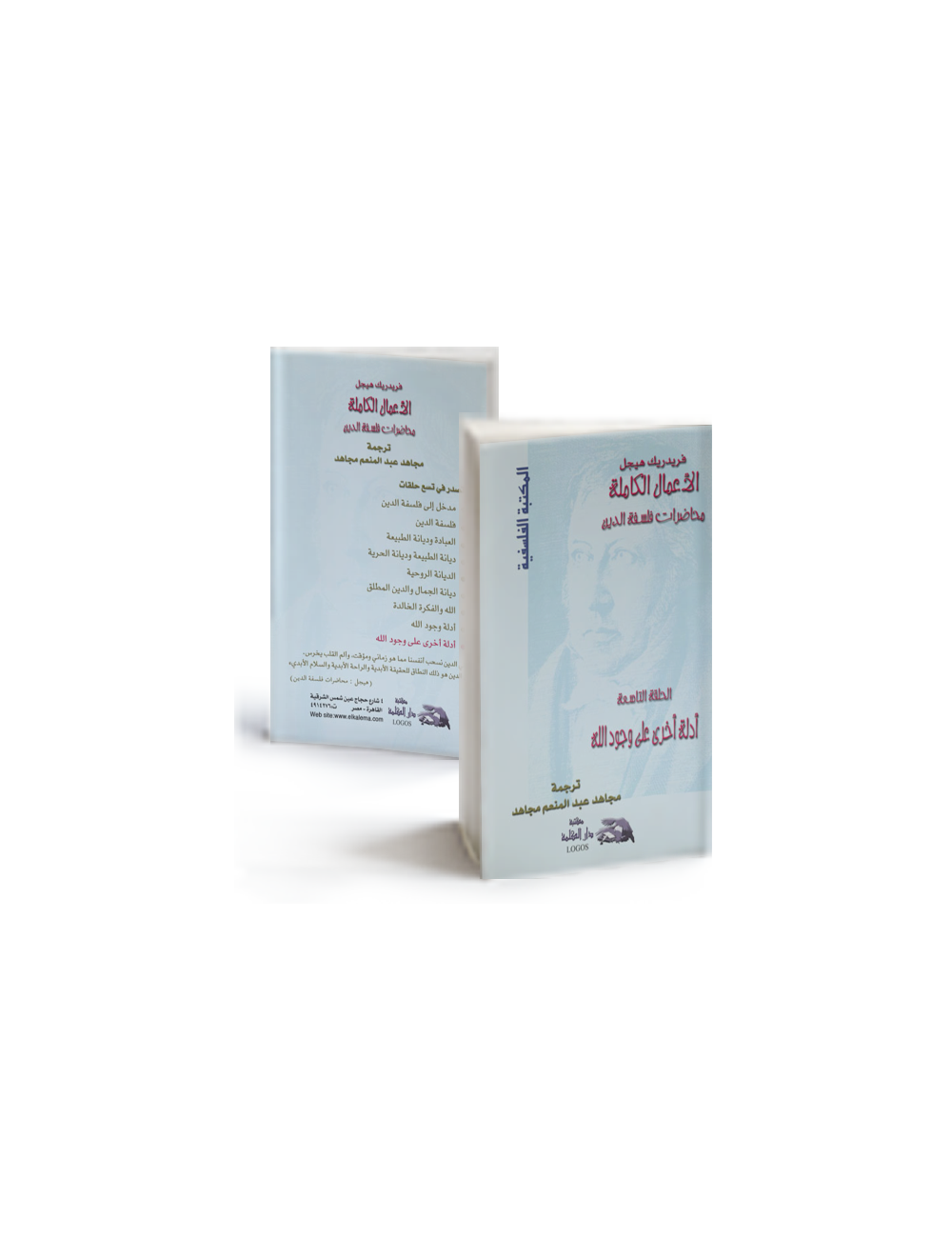
The world houses people equally with natural things. When the world is thus treated as a gathering or even a gathering of natural things, it is not conceived as nature, and we do not understand that it is something that is in itself a holistic system, a system of regulations and arrangements, especially laws.

Security policy

Delivery policy

Terms And Conditions
The evidence that we have to address with respect to its first aspect assumes the world in general, and above all assumes its accidental. The starting point is for the experimental and (total) things made of these things, which is the world. Certainly, the totality is higher and greater than its parts, the totality is determined as the unit that includes and gives its character to all parts, for example even when we talk about the whole house, and more than this in the case that this whole which is a self-existing unit like what the soul is but She is in bounce reference to the living body. In any case, it is understood from the word world that a group of material things, a heap of mere mere heaps of that infinite number of things that exist and are actually visible, and we can proceed to the conversation and say that each of them is conceived as being for itself.

Product |

Sale!
Lectures on the philosophy of religion: Other proofs of God's Existence
|
 Philosophy does not wear a feminine outfit
|

Sale!
Lectures on the philosophy of religion: The Religion of Nature and the Religion of Freedom
|
 Dynamics of Faith
|
Availability |
In Stock
|
|
in stock
|
In Stock
|
Price |
E£110.00
|
E£110.00
|
E£110.00
|
E£110.00
|
Description |
The world houses people equally with natural things. When the world is thus treated as a gathering or even a gathering of natural things, it is not conceived as nature, and we do not understand that it is something that is in itself a holistic system, a system of regulations and arrangements, especially laws. |
“A man is not born a woman, a man (becomes) a woman” (4: 156) |
One of the greatest books ever written on the subject, Dynamics of Faithis a primer in the philosophy of religion. Paul Tillich, a leading theologian of the twentieth century, explores the idea of faith in all its dimensions, while defining the concept in the process. This graceful and accessible volume contains a new introduction by Marion Pauck, Tillich's biographer. |
|
ISBN |
977-384-001-8 | 978-977-384-278-2 | 977-6010-65-2 | 977-384-156-1 |
Author |
Georg Wilhelm Friedrich Hegel | Mejahed Abdelmeaim mejahed | Georg Wilhelm Friedrich Hegel | Paul Tillich |
Translator |
Mejahed Abdelmeaim mejahed | Mejahed Abdelmeaim mejahed | Mejahed Abdelmeaim mejahed | |
Editor |
Mohamed H. A. Ghoneam | Mohamed H. A. Ghoneam | ||
Original Language |
English | Arabic | English | English |
Language |
Arabic (Translated) | Arabic (Translated) | Arabic (Translated) | |
Format |
Paperback | Paperback | Paperback | Paperback |
Publishing House |
Maktabet Dar El Kalema Publishing House | Maktabet Dar El Kalema Publishing House | Maktabet Dar El Kalema Publishing House | Maktabet Dar El Kalema Publishing House |
Number of Pages |
176 | 116 | 162 | 176 |
Product Dimensions |
20.5×13.3×0.7 | 21.5×12.3×0.5 | 20.3×14×0.8 | 20×12.4×1.2 |
Product Weight |
166 gm | 130 gm | 158 gm | 152 gm |
The main characteristic here is subjectivity as a self-determining force - and this subjectivity and rational power that we have met before in the form of the one who has not yet been defined within himself and whose goal - as it appears in the realm of reality - is in this the most specific thing possible.
First published in 1968, the year of international-student confrontation and revolution, this classic challenges readers to choose which of two roads humankind ought to take: the one, leading to a completely mechanized society with the individual a helpless cog in a machine bent on mass destruction; or the second, being the path of humanism and hope.
One of the greatest books ever written on the subject, Dynamics of Faithis a primer in the philosophy of religion. Paul Tillich, a leading theologian of the twentieth century, explores the idea of faith in all its dimensions, while defining the concept in the process.
This graceful and accessible volume contains a new introduction by Marion Pauck, Tillich's biographer.
Man's Search for Himself by Rollo May is a captivating and introspective guide that is a perfect fit for readers seeking a deeper understanding of themselves and their place in the world, particularly those grappling with anxiety, depression, and feelings of emptiness who are looking for a nuanced and insightful exploration of the human condition.
There is a common theme linking these studies this topic comes from the depth and diversity and richness of human nature from the side, and the other side also stems from humans and worthlessness in this nature.
In this book by Rollo May discusses some of the characteristics of human nature and human under the title of "problematic".
A person has needs in life, and the needs are arranged and gradual, some of them are basic and necessary, some of them touch his physical needs, and they are the ones that preserve his survival and presence in life, and some affect the mental and psychological side, and they help in his advancement, progress and creativity.
“[Alice Miller] illuminates the dark corners of child abuse as few other scholars have done.”―Jordan Riak, NoSpank.net
(New York Times Book Review)
In fact, Africa is a vast continent encompassing both geographic variation and tremendous cultural diversity. Each of the more than 50 modern countries that occupy the continent has its own particular history, and each in turn comprises numerous ethnic groups with different languages and unique customs and beliefs.
An examination of the Old Testament and later Jewish writings explores the evolution of the basic concepts of God, Man, history, sin, and repentance, and demonstrates the relevance of traditional beliefs in the contemporary world
In this clear and provocative account of the epistemology of religious experience, William P. Alston argues that the perception of God-his term for direct experiential awareness of God-makes a major contribution to the grounds of religious belief. Surveying the variety of reported direct experiences of God, Alston demonstrates that a person can be justified in holding certain beliefs about God on the basis of mystical experience.
In fact, Africa is a vast continent encompassing both geographic variation and tremendous cultural diversity. Each of the more than 50 modern countries that occupy the continent has its own particular history, and each in turn comprises numerous ethnic groups with different languages and unique customs and beliefs.
Reidar Thomte's Kierkegaard's Philosophy of Religion is an excellent read for students beginning their study of one of the "greats" of the nineteenth and twentieth century philosophy. Thomte directly appropriates Kierkegaard's insightful language and discussion of theological and philosophical issues that stimulated him, all of which are still alive and well today.


Product Comments